

Heating costs make up a very large part of our winter household bills. Both centralized heating in apartment blocks and individual boilers in private houses need careful management to stop wasting energy. Keeping the same temperature throughout a whole property often wastes heat, because empty or rarely used rooms get just as much energy as the main living areas. To fix this problem, we need devices that physically control the flow of hot water at the radiator level.
Why traditional systems waste energy
Traditional heating systems usually rely on a single wall thermostat or basic manual radiator valves. A central thermostat only measures the temperature in one specific place, like a hallway or living room. When this one sensor feels the room is warm enough, it turns off the boiler. As a result, other rooms with poor insulation or in colder corners stay chilly. On the other hand, if the heating stays on until the coldest room is warm, the main rooms become far too hot.
Manual radiator valves also cause a lot of waste. People rarely change these mechanical dials on a daily basis. Usually, someone sets the valve to a medium or high level at the start of autumn and leaves it there. When a room gets too hot, the normal reaction is to open a window instead of turning the valve down. This action lets the heat you have paid for escape directly outside, which makes the boiler work harder or increases your apartment’s energy bill.
Hardware upgrades for room-by-room control
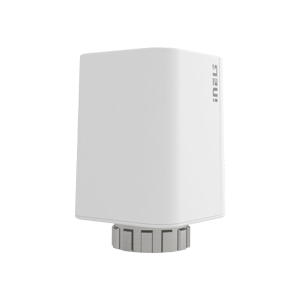
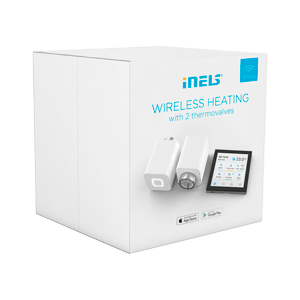
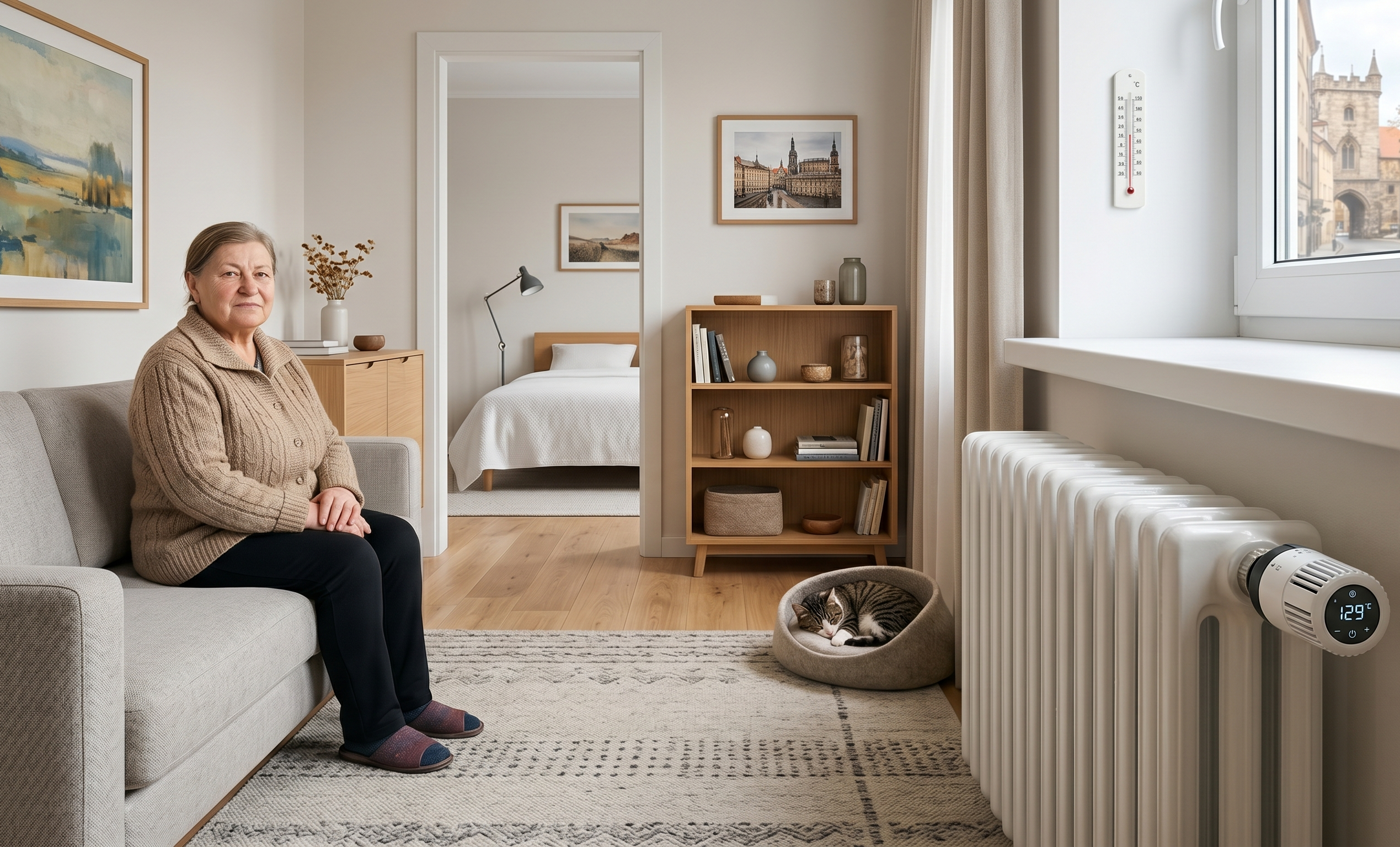
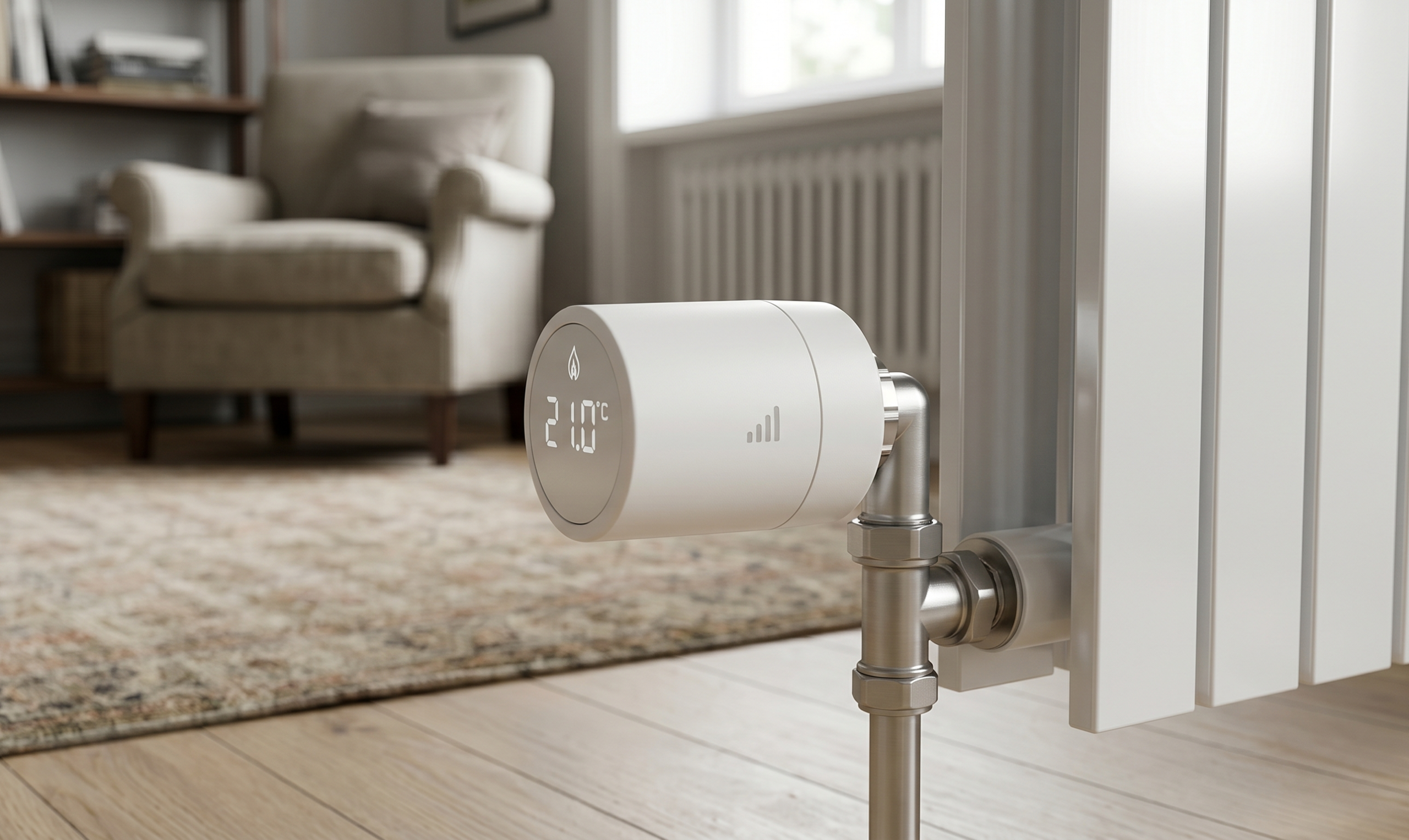
To use less energy, we need to move from central control to a smart, room-by-room system. The main device for this upgrade is a wireless thermostatic valve. This device replaces the standard manual dial on a radiator. It gives you automatic control over the hot water flow based on the exact temperature of the room and your personal schedule.
These wireless valves are small units powered by normal AA or AAA batteries. Inside, they have a tiny electric motor, a digital temperature sensor, and a radio module (using wireless connections like Zigbee, Z-Wave, or RF). The digital sensor constantly checks the temperature in the room. When the room reaches the temperature you want, the internal motor pushes a metal pin down to close the pipe, stopping the hot water. When the room gets colder, the motor pulls the pin back up so hot water can enter the radiator again.
Key functions that save energy
Automating your radiators introduces several useful features that help you use less energy:
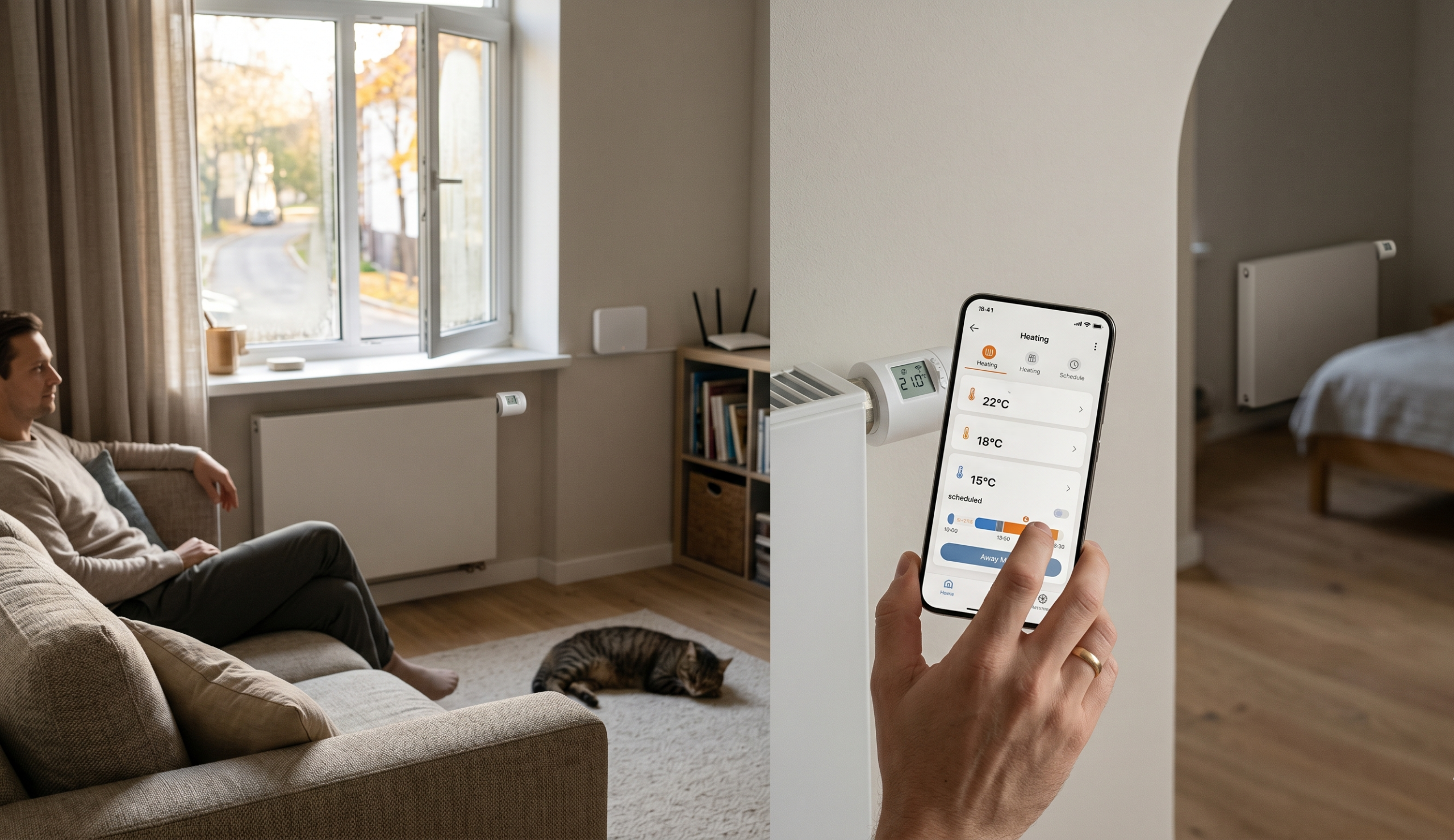
- Zone temperature management: Different rooms need different temperatures based on what you use them for. You might want your living room at 22°C in the evening, your bedroom at 18°C, and an empty guest room at just 15°C. Wireless valves keep these different temperatures separate, so you do not waste heat on empty spaces.
- Time-based scheduling: Smart home apps let you create daily and weekly plans for every single valve. For example, the device can automatically drop the temperature to 16°C at 8:00 AM when you leave for work, and start warming the house at 5:00 PM so it is comfortable when you get back. This saves about 8 to 9 hours of unnecessary heating every day.
- Open window detection: Modern wireless valves have smart software that notices sudden drops in temperature (for example, dropping by 1.5°C in just 3 minutes). The system realizes a window is open and immediately closes the radiator for a set time, like 30 minutes. This stops the radiator from running at full power while fresh air is coming in.
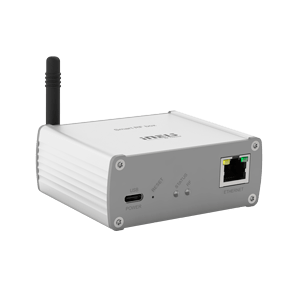
The radio module connects the valve to a central smart hub and your Wi-Fi router. Because of this, you can check and change the temperature of any room using an app on your smartphone, no matter where you are.
How this works with different heating systems
The way you save money depends on the type of heating infrastructure in your building:
| Heating System Type | Financial Benefits and Results |
| Individual Boilers (Gas or Electric) | When several valves close because rooms are warm enough, the water returning to the boiler stays hotter. The boiler’s sensors notice this and turn the power down or switch it off completely. Using room schedules usually cuts gas or electricity use by 20% to 30%, depending on the building’s insulation. |
| Apartments with Individual Heat Meters | If your apartment has its own meter measuring energy in gigacalories (Gcal), it works just like an individual boiler. When the smart valves restrict the water, the meter records less thermal energy passing through your pipes, which leads to a directly lower utility bill. |
| Apartments with Flat-Rate Billing | In older buildings without individual meters, you pay based on the size of your apartment. Here, smart valves will not change the cost of your bill. However, they completely stop the apartment from overheating, make your indoor climate much more comfortable, and stop you from needing to open windows to cool down. |
Installation and battery maintenance
Installing wireless thermovalves is a very simple physical swap that does not require any plumbing work. You simply unscrew the old manual head from the radiator (usually a standard M30x1.5 thread connection) and screw the new electronic unit in its place. You do not need to drain any water from the radiator or turn off the building’s main heating. If your valve has a different shape, manufacturers include special plastic or metal adapters in the box.
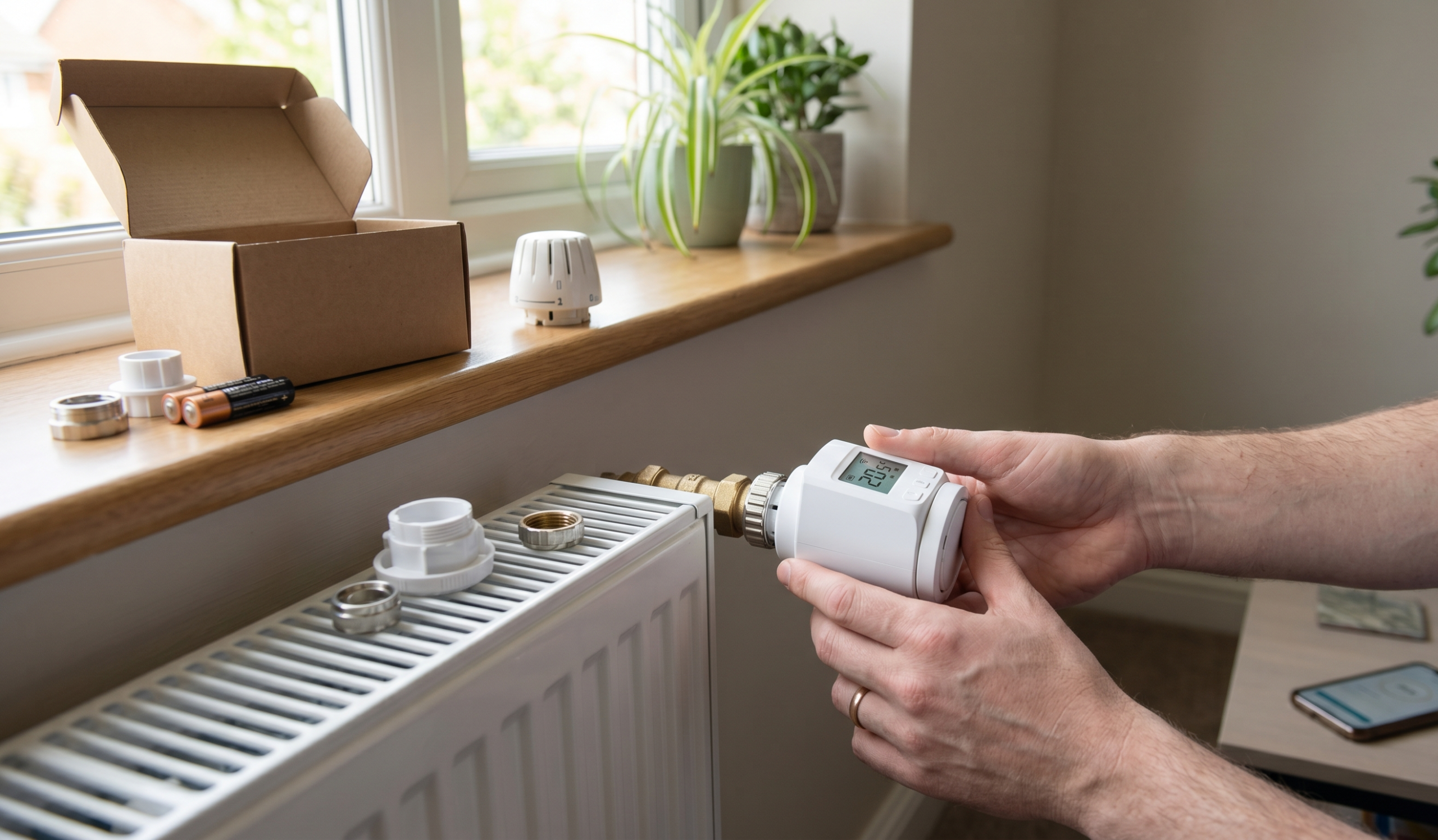
These devices do not need to plug into the wall. Standard alkaline batteries power the motor and radio connection for 12 to 24 months, depending on how often the motor has to move the pin. The smartphone app keeps track of the battery level and sends you a warning message when it is time to put new ones in.
Replacing manual radiator dials with wireless thermovalves changes a basic heating system into a smart, multi-zone network. By relying on exact temperature measurements, open-window detection, and strict daily schedules, these devices lower the amount of heat needed from individual boilers and reduce the energy recorded on apartment meters. Ultimately, this hardware directly stops energy waste and automatically manages the climate inside your home.